The Connection Between Mammograms and Early Breast Cancer Detection
October 13, 2026
Maximizing Your Outdoor Space With Deck Repair
October 13, 2026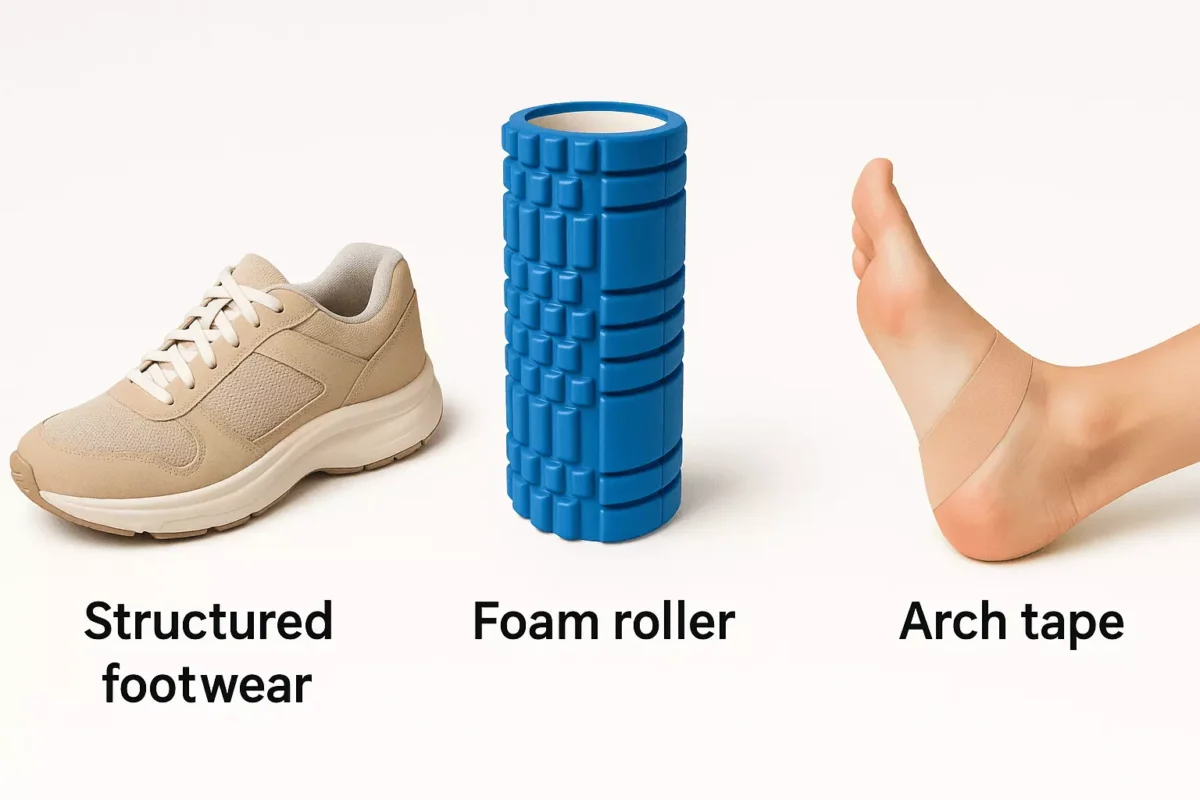
Plantar fasciitis causes pain along the bottom of your foot and heel. The plantar fascia supports your arch, and it absorbs stress while you walk. Your shoes affect how much strain this tissue endures. When footwear lacks support, the fascia can stretch and tighten.
Arch Support Basics
Arch support is the first feature to evaluate. A supportive shoe keeps your arch neutral, and it reduces strain on the plantar fascia. Look for a firm midsole that keeps its shape under pressure. If you press the arch area with your thumb, it should resist and not collapse. Not all arch support suits every foot type. Check the product description for arch-type guidance, as the wrong match can increase plantar fasciitis pain and slow recovery.
- Match support to your arch type: A low arch needs broader, flatter support, while a high arch needs a more pronounced curve.
- Choose durable materials: Dense foam or rigid plastic holds its shape longer than soft foam and keeps supporting your arch after repeated use.
- Discuss removable insoles: This design lets you add arch supports and gives you more control over fit.
- Look for semi-rigid supports: Fully rigid supports can be uncomfortable, and fully soft ones may not hold their shape.
Cushions for Heel Pain
Heel cushioning absorbs impact when your heel strikes the ground. Heel pain often peaks during the first steps. A slight heel lift can reduce fascia tension, but keep the drop moderate so you stay balanced. Choose shoes with a heel-to-toe drop of 8 to 12 millimeters. This range lifts the heel and reduces load on the plantar fascia. A high drop strains your Achilles tendon; a low drop may increase heel stress. Check the manufacturer’s specifications before you buy. Cushioning materials differ in quality and durability.
Gel inserts absorb impact well, and foam compounds like EVA provide lightweight support. Some shoes combine both materials to cushion the heel and midfoot. Avoid shoes with thin rubber soles and no padding, as these offer minimal shock absorption. Pay attention to how the heel counter fits your foot. If the counter collapses when pressed, the shoe may lack support. A secure heel fit reduces friction, and it help maintain proper alignment while you walk.
Shoe Fit and Stability
Hold the shoe at both ends and twist it gently. If the middle twists or folds easily, the shoe lacks support, so choose another pair. Check that the heel counter is firm when pressed from the outside. Toe box width is another factor to check. A narrow toe box compresses your toes, and it can shift pressure toward the ball of your foot. Choose shoes with enough room for your toes to spread, and makes sure the upper does not press on your toenails. This matters if you have wider feet or swelling during the day. Notice the shoe’s upper material as well. Breathable mesh keeps your foot cool and reduces friction that can cause irritation. A structured upper with reinforced sides gives your foot lateral support, and it helps keep it centered over the sole.
Minimize Plantar Fasciitis Today
Footwear is one part of plantar fasciitis care. Your doctor can review your shoes, and they will recommend the right arch supports. Your doctor can also teach you about stretching and discuss pain medication if your symptoms persist. Early care can help keep mild heel pain from becoming chronic.