Creating a Personalized Medical Weight Loss Plan That Works
October 1, 2026
Common Allergic Reactions and How To Treat Them
October 1, 2026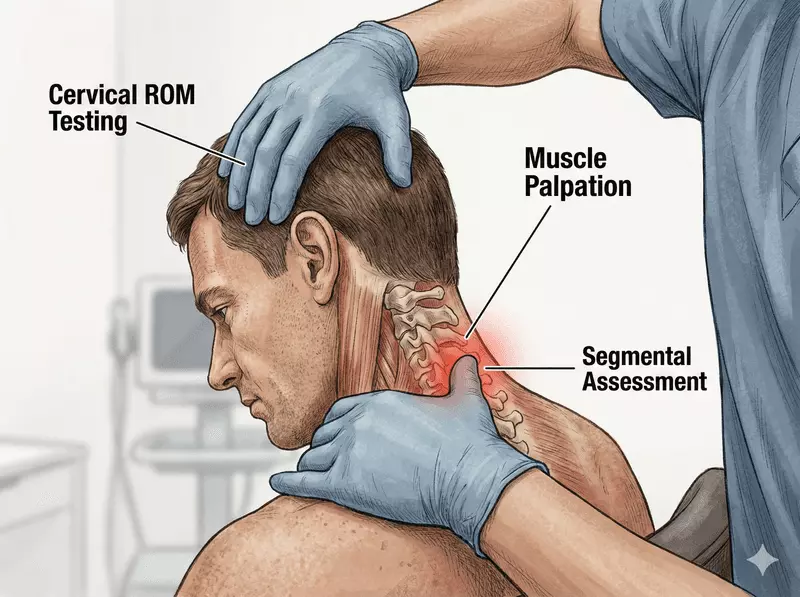
Chronic neck pain affects many athletes in contact and overhead sports, and players may absorb repeated impacts that lead to injuries. When pain persists for months, they become chronic. Here are some key steps in the diagnosis and treatment of chronic neck pain:
Physical Examination
Your appointment starts with a health history, and the provider asks about your sport and training load. Since symptoms often follow a pattern, details about timing and triggers help narrow the cause. Expect questions about past injuries and concussions. The provider then checks your posture and head position.
Once you finish the history, the provider measures how far your neck turns, tilts, and bends. Pressing on specific muscles and joints reveals areas of tenderness. Some athletes feel neck pain at the base of the skull, but others notice it between the shoulder blades.
A neurological check follows the movement tests. It looks at nerve function in your arms, and it helps rule out spinal cord involvement. To do this, the provider checks the following areas because pinched nerves may cause symptoms beyond the neck:
- Grip strength in both hands
- Reflexes at the elbow and wrist
- Sensation in the fingers and forearms
- Pain that travels down one arm
Diagnostic Tests
If the exam points to a structural problem, your provider may order imaging. X-rays show bone alignment and disc space height, and they take only a few minutes. CT scans give detailed cross-section images of the vertebrae. They help detect small fractures and bone spurs.
MRIs focus on soft tissue. Since an MRI uses magnets instead of radiation, it suits repeat imaging in young athletes. Each test has a specific role, and your provider selects one based on your symptoms. An MRI may reveal these findings:
- Discs that are herniated or bulging
- Ligament sprains
- Muscle strains
- Nerve root compression
Injected Steroids and Nerve Blocks
Some athletes do not improve with rest and physical therapy, and their providers may suggest injections. A steroid injection delivers anti-inflammatory medicine near the irritated area. Providers use X-ray guidance so that the needle reaches the correct spot. The effect may last weeks or months, depending on the person. While steroids target inflammation, nerve blocks interrupt pain signals from specific nerves.
Implantable Devices and Radiofrequency Ablation
Radiofrequency ablation builds on the results of a nerve block. If a block brings temporary relief, a provider may use heat to disrupt the same nerves. The procedure takes about an hour, and most patients go home the same day. The treated nerves may regrow eventually.
Spinal cord stimulators are implantable devices, and they send mild electrical pulses to the spinal cord. Before a permanent implant, patients typically complete a trial period. Doctors reserve these devices for long-term pain after other treatments. Each option carries specific risks to discuss with your provider.
Get Treated for Neck Pain
If neck pain limits your training or daily routine, a medical evaluation is a reasonable next step. A medical team can provide personalized treatment plans, careful safety protocols, and flexible scheduling. Treatment options differ for each athlete, and your plan depends on your exam and test results. Contact a neurological clinic today to schedule your consultation.